
Small Colocation
Small Colocation moves the provider into a dedicated facility environment. Residential handoffs give way to fibre, full-size racks become the norm, and the available catalogue expands into faster switching, edge security, and specialist service infrastructure.
Facility layout
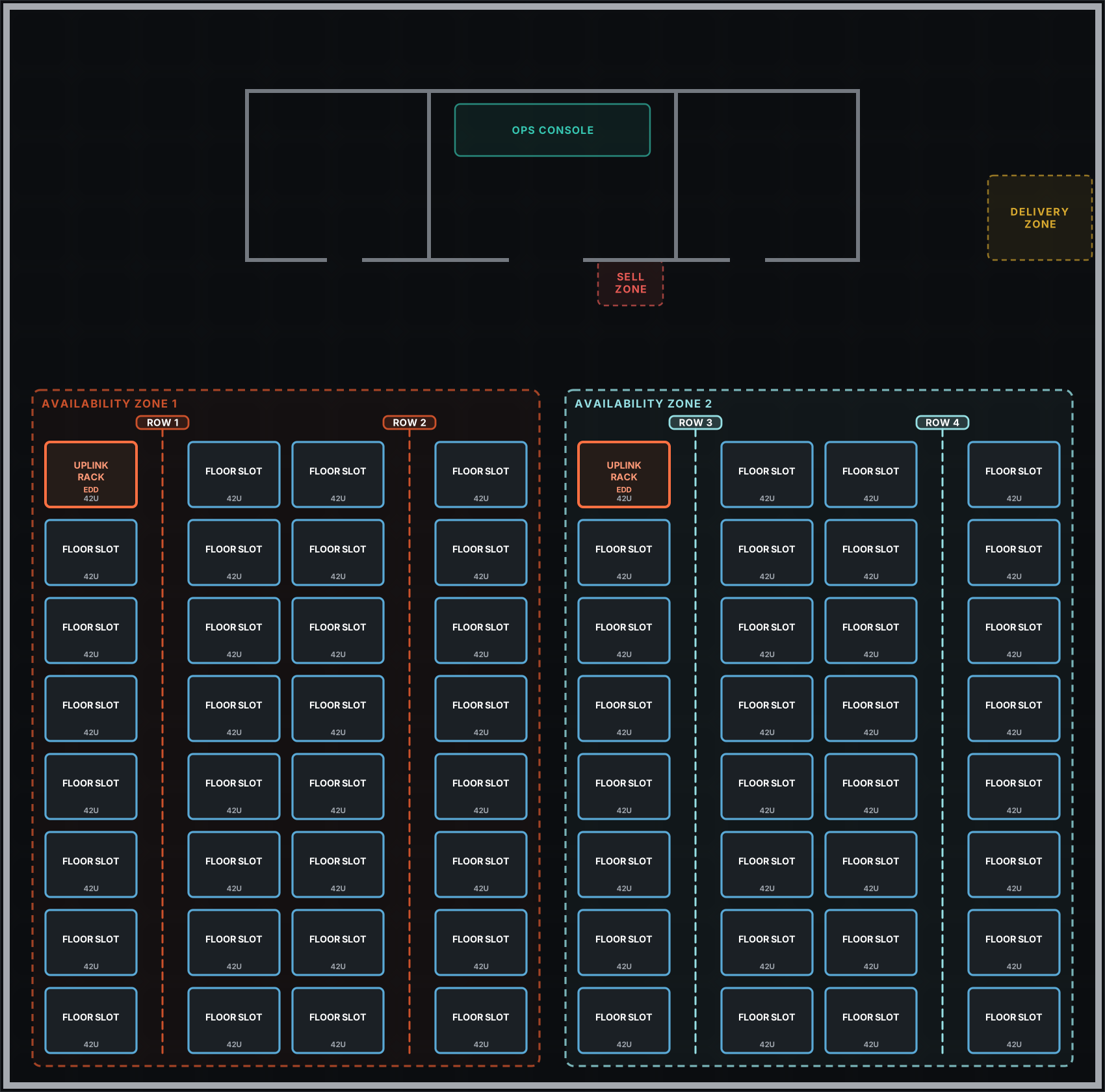
Role in progression
This map supports a more capable and more interconnected platform. The extra capacity is intended for larger customer fleets and services whose control planes, agents, storage, and network paths all consume real infrastructure.
Facility infrastructure
The 42U Full Rack is the standard cabinet for this site. It provides 42U of mounting space and an approximately 8 kW default power budget, but U and power remain separate constraints. High-density equipment can still exhaust the circuit before filling the rack.
Fibre network edge
The 4×25G Fibre Cross-Connect terminates up to four SFP28 carrier circuits. Connect those handoffs to edge gateways before the switching fabric to combine capacity and retain connectivity when an individual circuit fails.
The wider catalogue includes high-speed access, aggregation, leaf, and spine switches as well as dedicated security appliances and SIEM infrastructure. Those options enable stronger designs, but they do not replace the need to inspect shared power, network, and control-plane dependencies.
Capacity creates new failure domains
Faster links and larger racks increase the amount of infrastructure that can depend on one device. Review the blast radius of gateways, switches, power circuits, and service control planes before onboarding workloads at this scale.